
Beefsteak Fungus (Fistulina hepatica)
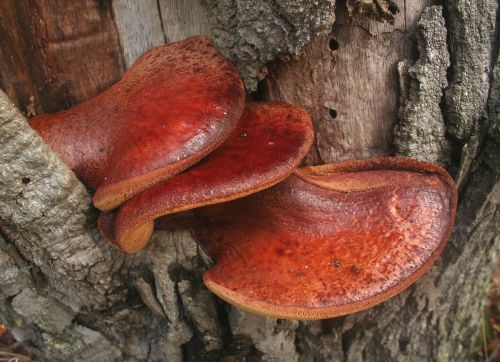


The beefsteak fungus, also known as ox tongue fungus, is one of the most visually striking mushrooms found in the UK due to its deep red, meat-like appearance and the dark red juice it releases when cut. It grows primarily on oak and sweet chestnut trees, usually appearing as a large, tongue-shaped bracket emerging directly from the trunk or base of the tree. Unlike gilled mushrooms, the underside is covered in tiny pores that release spores, similar to other bracket fungi. When young, the flesh is firm, moist, and slightly gelatinous, becoming tougher and more fibrous as it ages.
In terms of flavour, beefsteak fungus has a distinctive mildly acidic or lemony taste, which is quite unusual for a mushroom. This acidity softens during cooking, especially when the mushroom is soaked briefly or cooked with fats such as butter or oil. Young specimens can be sliced thinly and fried, slow-cooked, or even used as a meat substitute due to their dense texture. Some foragers also pickle or marinate it. Older specimens become tough and are best avoided for eating, although they are still useful for identification and study.
Identification Features:
- Large, tongue- or liver-shaped fruiting body
- Colour ranges from deep red to reddish-brown
- Surface looks wet, glossy or raw-meat-like
- When cut, flesh bleeds a red juice (very distinctive)
- Texture is firm, fleshy and dense
- Underside has tiny pale pores (not gills)
- No true stem, but sometimes a short attachment point
- Grows directly from oak or sweet chestnut trees
- Usually found singly or in small groups
- Fruits late summer to autumn in the UK
Foraging Safety:
- Very distinctive, few dangerous lookalikes in the UK
- Always confirm:
- Red, fleshy interior
- Pores underneath (not gills)
- Growing on oak or chestnut
- Pick young, fresh specimens
- Older ones become tough and sour
- Avoid mushrooms growing on:
- Polluted areas
- Roadside trees
- Only harvest part of the mushroom to allow regrowth
- As always, eat only when 100% confident of identification
Cooking Uses:
- Famous for its meaty texture and appearance
- Flavour is tangy, slightly acidic, not strongly mushroomy
- Often described as steak-like when prepared properly
- Best cooking methods:
- Thinly sliced and fried
- Slow-cooked or braised
- Marinated before cooking
- Excellent in:
- Stir-fries
- Stews and casseroles
- Grilled or roasted as a meat substitute
- Works well with:
- Butter or oil
- Garlic and onions
- Herbs like thyme or rosemary
- Cooking reduces acidity and improves flavour
- Young specimens are far superior for eating
video Recipe:
Mushroom Quiz 🍄
Question goes here