
Devil’s Bolete (Rubroboletus satanas)
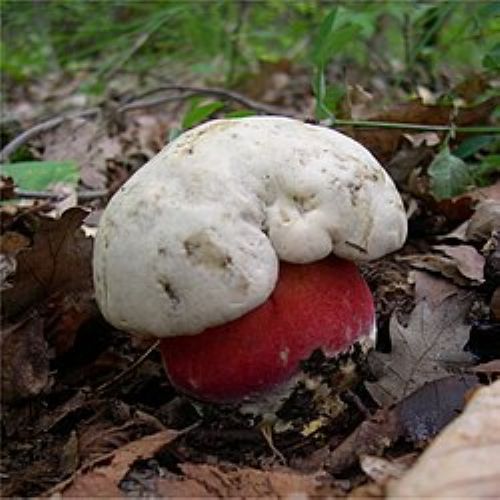
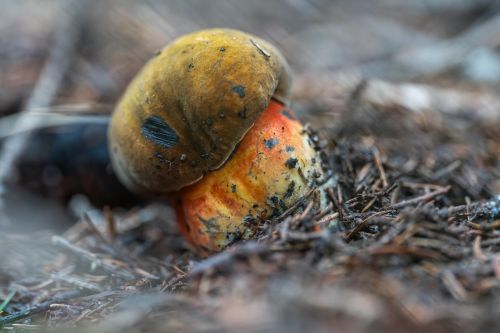
The Devil’s Bolete (Rubroboletus satanas) is one of the most striking and potentially dangerous bolete mushrooms found in Europe. Although rare in parts of the UK, it is important for foragers to recognise due to its bold colouring and resemblance to other edible boletes. This species typically grows in warm deciduous woodland, particularly near oak and beech trees, and appears during summer and early autumn. Its pale cap combined with vivid red pores and a thick, red-patterned stem make it visually distinctive.
Devil’s Bolete is poisonous and can cause severe gastrointestinal distress if consumed. While not usually fatal, it can lead to intense vomiting, diarrhoea and abdominal pain. Because many foragers are taught that “boletes are generally safe,” brightly coloured red-pored species like this one must be treated with caution. Proper identification is essential, and beginners are often advised to avoid all red-pored boletes entirely.
Identification Features:
- Large, thick and heavy mushroom
- Cap colour pale grey, off-white to light buff
- Cap surface smooth and sometimes slightly cracked
- Underside has bright red pores
- Pores bruise and turn blue when touched
- Stem is thick and bulbous
- Stem colour yellow to red, often with red network pattern
- Flesh is pale but stains blue when cut
- Strong, sometimes unpleasant smell in mature specimens
- Spore print is olive-brown
- Grows in deciduous woodland soil
- Commonly associated with oak and beech
- Fruits summer to early autumn
Foraging Safety:
- Poisonous - do not eat
- Causes:
- Severe vomiting
- Diarrhoea
- Abdominal pain
- Not typically fatal, but can cause serious illness
- Key danger signs:
- Red pores
- Blue staining flesh
- Beginners should avoid:
- All red-pored boletes
- Never rely on cap colour alone
- Many red and blue-staining boletes are toxic
- Cooking does NOT guarantee safety
- Avoid collecting brightly coloured boletes unless experienced
- If eaten accidentally:
- Seek medical advice immediately
- Best practice:
- Learn to recognise red pores
- Leave undisturbed
Identification video:
Mushroom Quiz 🍄
Question goes here