
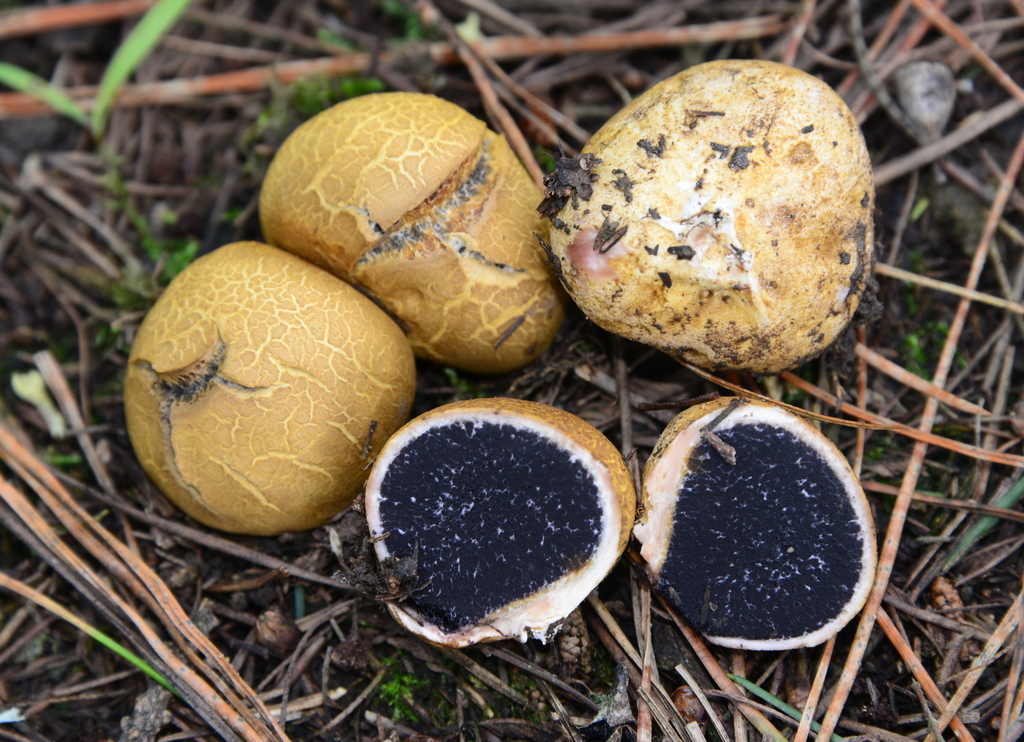
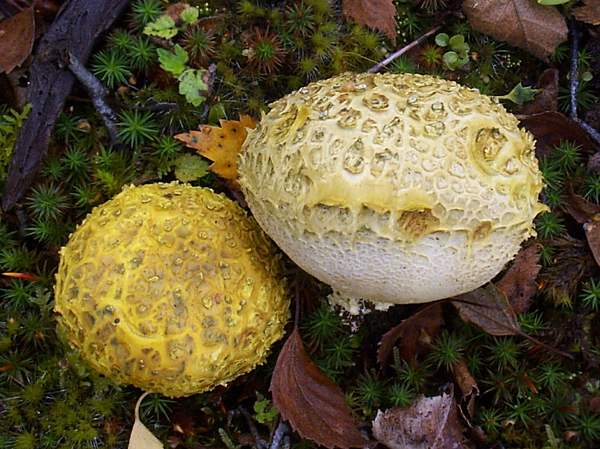
The Common Earthball (Scleroderma citrinum) is a widespread woodland fungus found throughout the UK. Although it resembles edible puffballs when young, it is poisonous and should never be eaten. Earthballs belong to a different group of fungi from true puffballs and have a very different internal structure. When immature, they may look similar from the outside, but cutting them open quickly reveals a dark interior rather than the pure white flesh of edible puffballs. Because of this similarity, Earthballs are responsible for many cases of accidental mushroom poisoning among beginners.
Earthballs grow in woodland, heathland and even parkland, often partially buried in soil. They have a tough, thick outer skin and a firm, solid feel. As they mature, the interior turns dark purple-black and powdery with spores. While poisoning is rarely fatal, consumption can cause significant gastrointestinal distress, including vomiting and diarrhoea. Foragers must always cut puffball-like fungi in half before considering them edible - this simple check prevents confusion with Earthballs and other toxic species.
Identification Features:
- Round to slightly irregular ball-shaped fungus
- Surface colour yellow-brown to ochre
- Thick, tough outer skin
- Surface often cracked, warty or scaly
- No visible cap, stem or gills
- Interior (when cut open):
- Starts pale
- Quickly becomes dark purple-black
- Develops into a powdery spore mass
- Flesh is firm and solid when young
- Smell can be slightly unpleasant or rubbery
- Often partly buried in soil
- Grows in woodland, heathland and grassy areas
- Commonly found near oak, birch and pine
- Fruits summer through autumn in the UK
Foraging Safety:
- Poisonous - do not eat
- Causes:
- Nausea
- Vomiting
- Diarrhoea
- Stomach cramps
- Frequently mistaken for edible puffballs
- Critical safety rule:
- Always cut puffball-like fungi in half
- Edible puffballs are pure white and solid inside
- Earthballs are dark inside
- Thick, tough outer skin is a warning sign
- Colour and shape alone are not reliable
- Cooking does NOT make it safe
- Beginners should avoid:
- All puffball-like fungi unless fully confident
- Children may mistake them for balls or toys
- If eaten accidentally:
- Seek medical advice if symptoms develop
- Best practice:
- Cut to identify
- Photograph and leave in place
Identification video:
Mushroom Quiz 🍄
Question goes here