
Field Blewit (Lepista saeva)
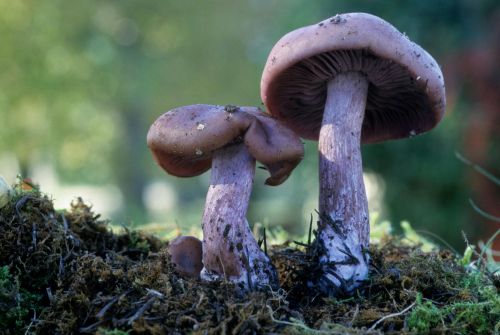
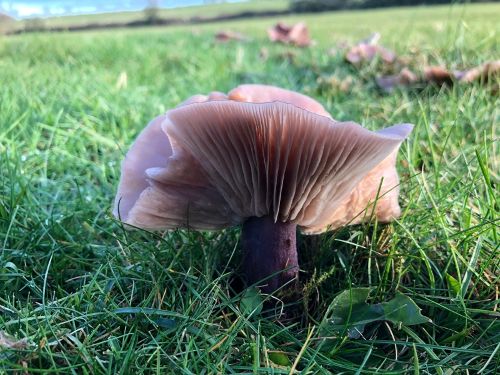
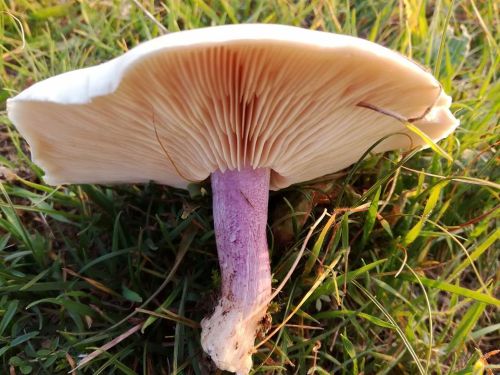
The Field Blewit (Lepista saeva), also known as Lepista personata, is a popular late-season wild edible mushroom found across the UK. Unlike the woodland-dwelling Wood Blewit, the Field Blewit typically grows in open grassland, pastures, parkland and lawns. It is most easily recognised by its pale buff or beige cap combined with a distinctive lilac or purple stem. This contrast makes it one of the more noticeable autumn mushrooms in grassy habitats. Field Blewits often appear in fairy rings or scattered groups and are commonly found from late autumn into early winter, sometimes persisting after light frosts.
As a wild edible mushroom, the Field Blewit is well regarded for its firm texture and rich, savoury flavour. It is considered a good choice for foragers who can confidently identify it, but careful checking is essential due to potential confusion with certain Cortinarius species, some of which are poisonous. The absence of rusty brown spores and the presence of a purple-tinged stem are important identification features. When properly identified and thoroughly cooked, Field Blewits are excellent in soups, stews, risottos and creamy mushroom dishes. Because of their grassland habitat and distinctive colouring, they remain a rewarding find for UK foragers during the colder months.
Identification Features:
- Cap colour buff, beige, tan or pale brown
- The stem is distinctly lilac/purple - main key feature
- Cap is smooth and slightly greasy when damp
- Starts convex, flattening with age
- Gills are crowded and pale lilac to pinkish-beige
- Thick, stout stem with no ring
- Flesh is firm and pale with faint lilac tones
- Smell is mildly fruity or mushroomy, less perfumed than Wood Blewit
- Usually grows in grassland rather than woodland
- Common in fields, pastures, lawns, parkland and verges
- Often appears in fairy rings or arcs
- Fruits late autumn through winter in the UK, often after frosts
Foraging Safety:
- Always cook thoroughly before eating
- Key ID feature: purple stem + brownish cap
- Can be confused with:
- Some Cortinarius species (poisonous)
- Always check for absence of rusty brown gills/spores
- Avoid mushrooms growing on:
- Road verges
- Dog walking areas
- Treated lawns or farmland sprayed with chemicals
- Pick fresh, firm specimens
- Only eat when 100% confident of identification
Cooking Uses:
- Considered a very good edible mushroom
- Flavour is rich, nutty and savoury
- Holds texture well when cooked
- Great for:
- Frying in butter
- Cream sauces
- Mushroom pies
- Risottos
- Pasta dishes
- Soups and stews
- Works well with:
- Garlic, onion, thyme, parsley, cream, white wine
- Excellent mushroom for winter foraging meals
- Cook for 15–20 minutes minimum
video Recipe:
Mushroom Quiz 🍄
Question goes here