
Fly Agaric (Amanita muscaria)
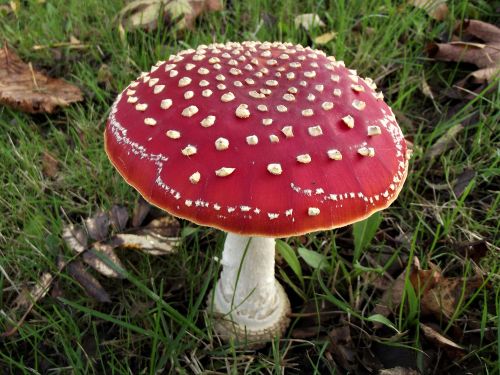
The fly agaric (Amanita muscaria) is one of the most recognisable mushrooms in the UK, famous for its bright red cap covered in white wart-like spots, and it commonly grows in woodland areas from late summer through autumn, particularly in association with birch, pine, and spruce trees. The cap starts out rounded and becomes flatter with age, while the gills underneath are white and free from the stem. The stem itself is white, with a noticeable ring, and the base is swollen with remnants of a veil. Fly agaric is considered toxic and should never be eaten, as it contains psychoactive compounds such as muscimol and ibotenic acid, which can cause nausea, vomiting, confusion, dizziness, sweating, and hallucinations; although it is rarely fatal, its effects are unpredictable and potentially dangerous. Historically, the mushroom was used in folklore and traditional practices, including as an insecticide when mixed with milk, which is where its common name originates. Despite its striking appearance and cultural significance, the fly agaric is unsafe for consumption and should only be observed and photographed in the wild.
Identification Features:
- Bright red to scarlet cap covered with white warty spots
- Cap starts rounded, later flattening with age
- White spots are remnants of a universal veil and may wash off in heavy rain
- Gills are white, crowded and free from the stem
- Stem is white, tall and fairly thick
- Prominent white ring (skirt) on the upper stem
- Base of stem has a bulbous swelling with veil remnants (not a full cup like Deathcap)
- Flesh is white and does not change colour when cut
- Spore print is white
- Grows in association with birch, pine, spruce and other trees
- Found in woodland, heathland, parks and gardens
- Fruits late summer to autumn in the UK
Foraging Safety:
- Do not eat - poisonous and psychoactive
- Contains ibotenic acid and muscimol, affecting the nervous system
- Causes symptoms such as:
- Nausea and vomiting
- Confusion and disorientation
- Drowsiness or agitation
- Hallucinations and delirium
- Effects are unpredictable and vary between individuals
- Cooking, drying or preparation does NOT make it safe
- Can be confused with:
- Other red or orange Amanita species
- Young Deathcaps before colour fully develops
- Never rely on:
- Colour alone
- Folk traditions or historical use
- Dangerous for children and pets
- Frequently encountered due to its iconic appearance - do not assume recognisability equals safety
- If ingestion is suspected:
- Seek medical advice immediately
- Monitor symptoms closely
- Best practice for foragers:
- Admire, photograph, leave untouched
Identification video:
Mushroom Quiz 🍄
Question goes here