
Hedgehog Mushroom (Hydnum repandum)
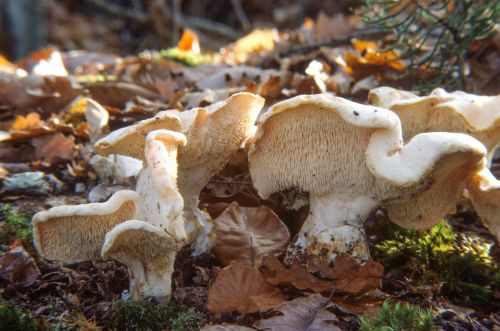


The Hedgehog Mushroom (Hydnum repandum) is a highly regarded wild edible mushroom found throughout the UK and Europe. It grows in woodland, particularly in association with deciduous trees such as beech and oak, though it can also be found near conifers. Fruiting from late summer through autumn - and sometimes into early winter - it is often found in scattered groups on mossy woodland floors. Its firm texture and pale colouring make it a noticeable and rewarding find for foragers.
Hedgehog Mushrooms are considered one of the safest wild mushrooms for beginners to learn because they have very few dangerous lookalikes. Instead of gills or pores, they have soft spines or “teeth” hanging from the underside of the cap, which makes identification straightforward. They have a pleasant, slightly nutty flavour and a firm texture that holds up well in cooking. Because of their distinctive features and excellent culinary qualities, Hedgehog Mushrooms are a favourite among experienced foragers in the UK.
Identification Features:
- Cap colour cream to pale apricot
- Cap surface smooth, sometimes slightly uneven
- Cap often irregular or wavy in shape
- Underside has soft, downward-pointing spines (teeth)
- Spines are pale cream and easily detachable
- No true gills or pores
- Stem is thick, pale and solid
- Flesh is firm and white
- Flesh does not stain dramatically when cut
- Spore print is white
- Grows in woodland soil, not on wood
- Common near:
- Beech
- Oak
- Pine
- Fruits late summer through autumn
Foraging Safety:
- Considered an excellent and safe edible
- Very few dangerous lookalikes in the UK
- Key safety feature:
- Presence of spines instead of gills
- Beginners should confirm:
- No gills present
- Pale cream colouring
- Avoid collecting very old specimens (can become bitter)
- Check for insect damage
- Avoid polluted areas
- Always cook before eating
- When unsure - double-check identification
Cooking Uses:
- Mild, nutty and slightly sweet flavour
- Firm texture that holds shape well
- Excellent for:
- Frying in butter
- Cream sauces
- Risottos
- Pasta dishes
- Soups
- Can become slightly bitter in older specimens
- Remove debris from spines carefully
- Pairs well with:
- Garlic
- Thyme
- Cream
- Suitable for drying or freezing
- One of the most beginner-friendly edible mushrooms
Video Recipe:
Mushroom Quiz 🍄
Question goes here