
Velvet Shank (Flammulina velutipes)
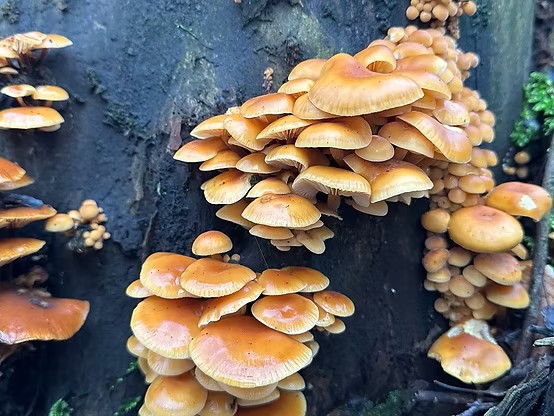


The Velvet Shank (Flammulina velutipes) is a winter-fruiting edible mushroom commonly found growing on dead or dying hardwood trees throughout the UK. It is most often seen from late autumn through winter, even during frosty conditions, making it one of the few reliable cold-season mushrooms for foragers. Velvet Shank typically grows in clusters on wood, especially elm, willow and beech. Its orange-brown cap and distinctive dark, velvety stem base make it relatively easy to recognise once you are familiar with its key features.
Velvet Shank is valued as a mild, pleasant edible mushroom when properly identified and thoroughly cooked. The caps are soft and tender, while the lower part of the stem can be tough and fibrous, so many foragers discard the stem base before cooking. It is important to identify Velvet Shank carefully, as it can be confused with the highly poisonous Funeral Bell (Galerina marginata), which also grows on wood. The combination of pale gills, winter fruiting season and a dark velvety stem base helps distinguish it from dangerous lookalikes. When confidently identified, Velvet Shank is excellent in soups, stir-fries and winter broths, making it a valuable addition to the UK foraging calendar.
Identification Features:
- Small to medium orange-brown to honey-coloured cap
- Cap is smooth and sticky/slimy in wet or frosty weather
- Cap shape starts convex, flattening with age
- Gills are pale cream to white, fairly crowded
- Slender stem with a dark brown to black velvety base (key feature)
- Stem is tough and fibrous, especially toward the base
- No ring on the stem
- Grows in clusters
- Found on dead or dying hardwood, especially elm, willow and beech
- Fruits mainly late autumn through winter, even during frost
- Often one of the only mushrooms visible in mid-winter
Foraging Safety:
- mportant lookalike: Deadly Galerina (Galerina marginata) highly poisonous
- Key safety checks:
- Velvet Shank has white/cream gills
- Deadly Galerina has brown gills and brown spores
- Velvet Shank stem base is dark and velvety, not powdery
- Only collect from hardwood, not conifers
- Avoid old, waterlogged or decaying specimens
- Discard the tough stem base before cooking
- Avoid mushrooms growing near:
- Roads
- Polluted waterways
- Treated timber
Cooking Uses:
- Mild, pleasant flavour
- Texture is soft in the cap, chewy in the stem
- Best to:
- Use caps only or trim tough stem bases
- Excellent in:
- Soups and broths
- Stir-fries
- Ramen and noodle dishes
- Light sautés
- Absorbs flavours well from sauces and stock
- Always cook thoroughly before eating
- Wild Velvet Shank is related to cultivated enoki mushrooms
- Great winter foraging mushroom when little else is available
video Recipe:
Mushroom Quiz 🍄
Question goes here