Verdigris Agaric (Stropharia aeruginosa)
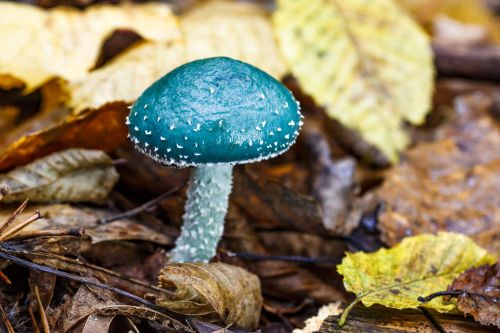
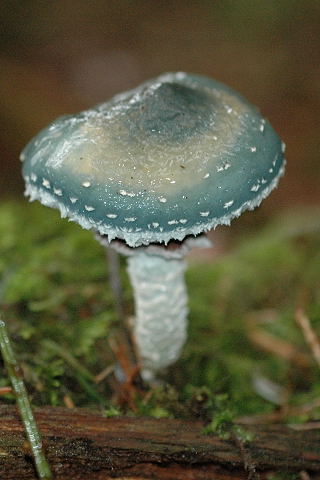

The Verdigris Agaric (Stropharia aeruginosa) is a striking blue-green woodland mushroom commonly found across the UK. Its vivid colour, often described as turquoise or copper-green, makes it one of the more visually distinctive fungi in autumn woodlands. The name “verdigris” refers to the green patina that forms on weathered copper, which closely resembles the cap colour of this mushroom. Despite its attractive appearance, it is generally considered inedible or mildly poisonous, and it is not regarded as a safe edible species.
While it is not known to be deadly like some Amanitas or Cortinarius species, the Verdigris Agaric can cause gastrointestinal upset if consumed. Reports suggest symptoms such as nausea and stomach discomfort. Additionally, identification can be complicated by colour changes as the mushroom ages - the blue-green tones often fade to yellowish or brownish hues, increasing the risk of confusion with other species. Because of its uncertain edibility status and potential to cause illness, it is best treated as a mushroom to admire and photograph rather than collect for food.
Identification Features:
- Cap colour blue-green to turquoise, sometimes with yellowish tones
- Cap surface often slimy or sticky when wet
- Cap may have small white veil fragments when young
- Cap starts convex, flattening with age
- Colour may fade toward olive or brownish as it matures
- Gills are pale grey to purplish-grey, becoming darker with age
- Gills are attached to the stem
- Stem is pale blue-green or whitish, often with a ring
- A fragile ring (skirt) is usually present on the stem
- Stem surface may show small scales below the ring
- Spore print is dark purple-brown
- Grows in woodland, especially in mossy areas
- Often found in deciduous woodland, sometimes near conifers
- Fruits late summer through autumn in the UK
Foraging Safety:
- Not considered a safe edible mushroom
- May cause nausea and stomach upset
- Edibility reports are inconsistent - safest to treat as inedible
- Colour fades with age, increasing risk of misidentification
- Can be confused with:
- Other blue-green woodland fungi
- Young Stropharia species
- Never rely on:
- Bright colour as an indicator of safety
- Slime on the cap can make identification harder in wet weather
- Cooking does not guarantee safety
- Beginners should avoid:
- All blue-green gilled woodland mushrooms
- If eaten accidentally and symptoms develop:
- Seek medical advice
- Best practice:
- Photograph and leave in place
Identification video:
Mushroom Quiz 🍄
Question goes here