
Deadly Webcap (Cortinarius rubellus)
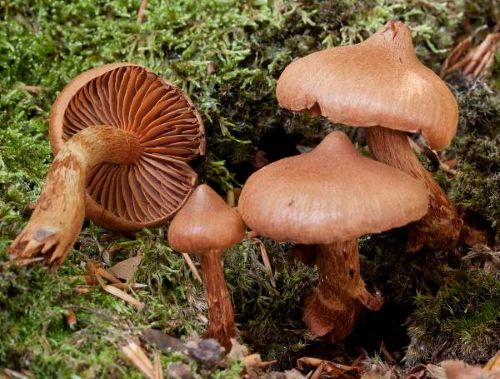
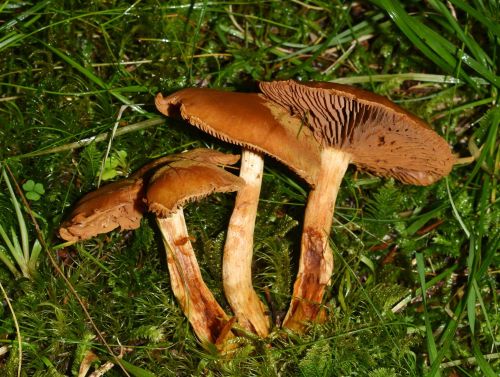
The Deadly Webcap (Cortinarius rubellus) is one of the most dangerous mushrooms found in the UK and across Europe. It grows in coniferous and mixed woodland, often among moss, appearing from late summer into autumn. The cap is typically rusty orange to reddish-brown, with a dry or slightly fibrous surface, and the stem is slender and similarly coloured. When young, the mushroom has a fine cobweb-like veil (called a cortina) between the cap and stem, a key feature of webcap mushrooms.
This species contains the toxin orellanine, which causes severe and irreversible kidney damage. What makes it particularly dangerous is the delayed onset of symptoms, signs of poisoning may not appear for several days or even weeks after ingestion. By the time symptoms develop, kidney failure is often advanced, and there is no specific antidote. Severe cases may require lifelong dialysis or kidney transplantation.
Identification Features:
- Cap colour orange-brown to rust-brown
- Cap is dry, matte and often fibrous
- Cap starts conical or bell-shaped, later flattening slightly
- Cap surface may show fine fibres or scales
- Gills are cinnamon to rust-brown
- Gills are crowded and attached to the stem
- Stem is slender, orange-brown, often fibrous
- Young specimens have a cobweb-like veil (cortina) between cap and stem
- Leaves rusty brown threads or bands on the stem
- Flesh is orange-brown to pale brown
- No ring on the stem
- Spore print is rusty brown
- Grows in woodland, especially with birch, beech and conifers
- Usually found singly or scattered, not dense clusters
- Fruits late summer to autumn in the UK
Foraging Safety:
- Extremely poisonous - never eat
- Contains orellanine, a toxin that causes delayed kidney failure
- Symptoms often appear 2–14 days after ingestion
- Early symptoms may be mild or absent, leading to dangerous delays in treatment
- Poisoning can result in:
- Permanent kidney damage
- Dialysis dependency
- Death
- Cooking, drying or freezing does NOT destroy the toxin
- Frequently mistaken for:
- Chanterelles
- Other brown woodland mushrooms
- Major danger sign:
- Rusty brown gills and spores
- Presence of a cobweb-like cortina
- Never rely on
- Colour
- Size
- Smell
- Habitat alone
- Beginners should avoid all Cortinarius species
- One of the most dangerous mushroom groups in the UK
- If ingestion is suspected:
- Seek emergency medical help immediately
- Explain possible mushroom poisoning - do not wait for symptoms
- Best practice:
- Do not collect
- Photograph and leave untouched
Identification video:
Mushroom Quiz 🍄
Question goes here