
Wood Ear (Auricularia auricula-judae)

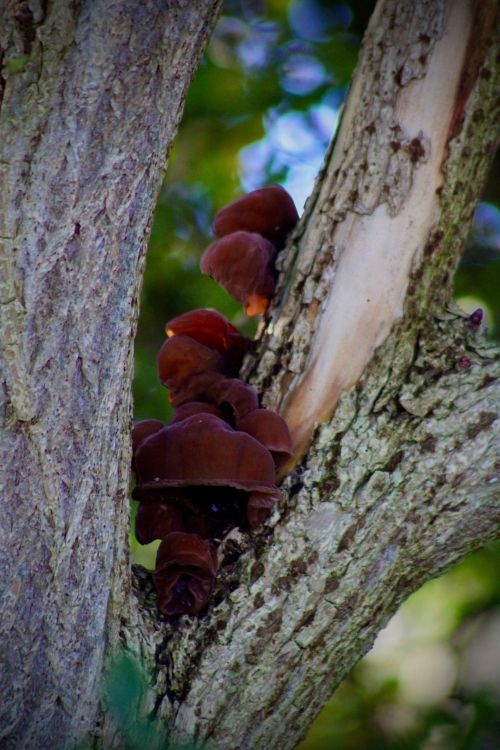
The Wood Ear mushroom (Auricularia auricula-judae) is a distinctive jelly-like fungus commonly found growing on dead or dying elder trees across the UK. Unlike typical cap-and-stem mushrooms, Wood Ear has a soft, ear-shaped appearance and a rubbery texture, making it easy to recognise once you know what to look for. It thrives in damp conditions and can be found throughout the year, especially during autumn and winter. This species grows directly from wood rather than soil and often appears in clusters on fallen branches and trunks.
Although mild in flavour, Wood Ear mushrooms are highly valued for their unique texture rather than taste. They are widely used in Asian cuisine, particularly in soups and stir-fries, where they absorb surrounding flavours beautifully. Wood Ear is considered edible when properly identified and cooked, and it has very few dangerous lookalikes in the UK. Because of its distinctive shape, woodland habitat and jelly-like consistency, it is one of the easier wild mushrooms for beginners to learn. When harvested fresh or dried for later use, Wood Ear makes a versatile and interesting addition to a wild food collection.
Identification Features:
- Distinctive ear-shaped or cup-shaped fruiting body
- Jelly-like, rubbery texture feels gelatinous and flexible
- Colour ranges from reddish-brown to dark brown or almost black
- Smooth inner surface with slightly velvety outer surface
- No true stem attaches directly to wood
- Grows in clusters or groups
- Found mainly on elder trees, but also on other hardwoods
- Can be found all year round in the UK, especially in damp weather
- Often shrinks when dry and re-hydrates after rain
- Looks very different from typical cap-and-stem mushrooms
Foraging Safety:
- One of the easiest wild mushrooms to identify
- Few dangerous lookalikes in the UK
- Always check it is growing on dead or dying wood
- Should feel rubbery and flexible, not brittle or slimy
- Avoid mushrooms growing on:
- Treated timber
- Polluted areas or roadside trees
- Pick clean, fresh specimens older ones can be tough
- Only eat when confident in identification
Cooking Uses:
- Mild flavour but prized for unique crunchy, jelly-like texture
- Common in Chinese and Asian cooking
- Usually used dried or rehydrated
- Excellent in:
- Stir-fries
- Soups (especially hot and sour soup)
- Noodle dishes
- Broths and stews
- Absorbs flavours from sauces and spices very well
- Must be cooked before eating
- Can be dried easily for long-term storage
- Often paired with:
- Soy sauce, ginger, garlic, chilli, sesame oil
video Recipe:
Mushroom Quiz 🍄
Question goes here