
Bitter Bolete (Tylopilus felleus)
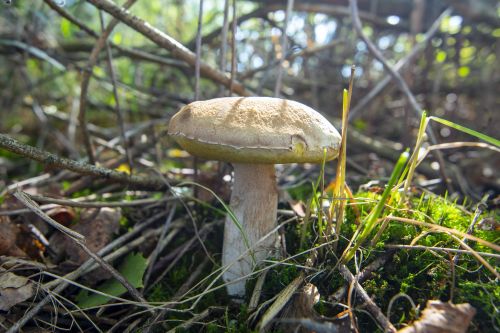


The Bitter Bolete (Tylopilus felleus) is a common woodland mushroom found throughout the UK and Europe. It grows in soil in association with both deciduous and coniferous trees, often appearing from late summer through autumn. At first glance, it closely resembles the highly prized Porcini (Boletus edulis), which makes it one of the most important lookalike species for foragers to learn. Its brown cap, thick stem and sponge-like pore surface underneath give it the classic “bolete” appearance that many people associate with edible woodland mushrooms.
Despite its appealing look, the Bitter Bolete is considered inedible due to its intensely bitter taste. Even a small piece cooked into a meal can make the entire dish unpleasant. While it is not known to be dangerously poisonous, it has no culinary value and can easily disappoint inexperienced foragers hoping to find porcini. Careful identification is therefore essential when collecting any bolete species in the UK.
Identification Features:
- Cap colour light brown to dark brown
- Cap surface smooth, sometimes slightly velvety
- Cap starts rounded, becoming cushion-shaped with age
- Underside has pores (not gills)
- Pores are white at first quickly turning pinkish
- Mature pore surface becomes distinctly pink
- Stem is thick and swollen
- Stem shows a prominent dark brown net-like pattern (reticulation)
- Flesh is white and does NOT change colour when cut
- Spore print is pinkish-brown
- Grows in woodland soil, not on wood
- Fruitslate summer to autumn in the UK
Foraging Safety:
- Not poisonous, but inedible due to extreme bitterness
- Frequently mistaken for:
- Key safety differences from Porcini:
- Bitter Bolete has pink pores
- Porcini pores stay white to yellow, never pink
- Bitter Bolete stem netting is often darker and more pronounced
- Avoid any bolete with:
- Distinct pink pore surface
- Do not rely on cap colour alone
- Always check the underside carefully
- Avoid old or insect-damaged specimens
- If unsure - do not cook
- Beginners should double-check all “porcini-looking” mushrooms
Identification video:
Mushroom Quiz 🍄
Question goes here