
Porcini Mushroom (Boletus edulis)
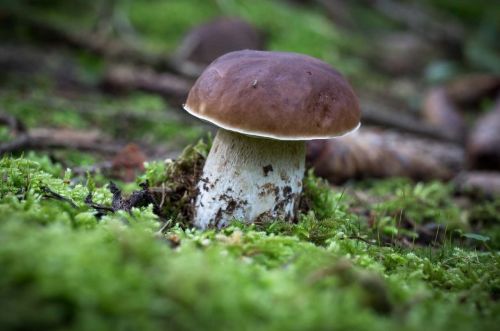


The Porcini mushroom, also known as the Cep, is one of the most highly prized wild edible mushrooms in Europe and is widely regarded as a king among mushrooms. In the UK, Porcini grow in woodland where they form a mycorrhizal relationship with trees such as oak, beech, birch and pine. They are most commonly found in late summer and autumn and often appear after warm rain. Their large size, solid build and rich aroma make them a favourite of both professional chefs and home foragers.
Porcini are valued for their deep, nutty flavour and firm texture, which holds up well in a wide range of dishes. Unlike many delicate mushrooms, they are excellent both fresh and dried, with drying intensifying their flavour. While Porcini are generally considered a good edible mushroom, careful identification is still essential, as there are several bitter or mildly toxic lookalikes among the boletes. Learning to recognise the key features of Boletus edulis ensures safe and rewarding foraging.
Identification Features:
- Large, thick and robust mushroom
- Cap colour brown to chestnut, smooth and slightly shiny
- Cap shape starts rounded, becoming cushion-like with age
- Underside has pores, not gills
- Pores start ,white, turning yellowish, then olive-green
- Stem is thick, swollen and pale
- Stem has a distinctive white net-like pattern (reticulation) near the top
- Flesh is white and does not change colour when cut
- Pleasant, nutty mushroom smell
- Spore print is olive-brown
- Grows in woodland soil, not on wood
- Common near oak, beech, birch and pine
- Fruits late summer through autumn in the UK
Foraging Safety:
- Only eat when 100% confident of identification
- Key safety rule:
- White flesh that does NOT change colour
- Common lookalikes include:
- Avoid boletes with:
- Red pores
- Blue staining flesh
- Avoid old, sponge-like specimens
- Check carefully for insect damage
- Avoid picking from:
- Roadsides
- Polluted woodland
- Harvest responsibly:
- Cut cleanly at the base
- Leave small or immature specimens
- Beginners should:
- Learn bolete pore colours before collecting
- If unsure - do not eat
Cooking Uses:
- Highly prized for rich, nutty and umami flavour
- Excellent fresh or dried
- Ideal for:
- Risottos
- Pasta
- Soups
- Sauces
- Stews
- Drying intensifies flavour dramatically
- Pairs well with:
- Butter
- Garlic
- Parsley
- Thyme
- Parmaesan
- Slice and dry for long-term storage
- Avoid washing - brush clean instead
- One of the best all-round edible mushrooms
Video Recipe:
Mushroom Quiz 🍄
Question goes here