
Chanterelle Mushroom (Cantharellus cibarius)
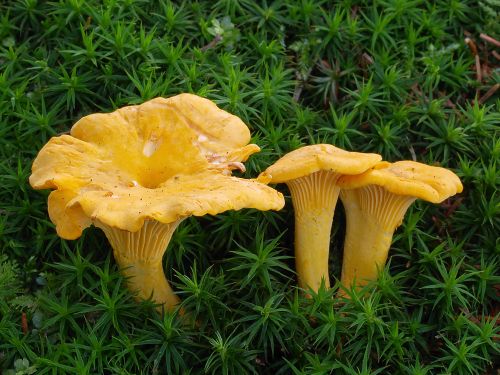

The Chanterelle Mushroom (Cantharellus cibarius) is one of the most prized wild edible mushrooms in the UK and across Europe. Known for its vibrant golden-yellow colour and delicate fruity aroma, it is highly sought after by chefs and foragers alike. Chanterelles form a symbiotic (mycorrhizal) relationship with trees such as oak, beech, birch and pine, meaning they grow from the soil in woodland rather than on wood. They often appear in scattered groups or loose clusters, sometimes carpeting mossy woodland floors during late summer and autumn.
Chanterelles are valued not only for their flavour but also for their firm texture and low risk of insect damage compared to many other mushrooms. They have a distinctive apricot-like smell when fresh and a rich, slightly peppery taste when cooked. Because of their popularity, they are sometimes confused with lookalikes such as the False Chanterelle and certain toxic species. Proper identification is essential, but once confidently recognised, they are considered one of the safest and most rewarding mushrooms for UK foragers.
Identification Features:
- Bright golden yellow to egg-yolk orange cap
- Cap starts convex, becoming funnel-shaped with wavy edge
- Underside has blunt, forked ridges (not true gills)
- Ridges run down the stem (decurrent)
- Flesh is firm and pale yellow to white
- Strong, pleasant apricot or fruity smell
- Stem is solid, smooth and same colour as cap
- No ring or volva present
- Spore print is pale yellow to white
- Grows in soil in woodland, not on wood
- Common near oak, beech, birch and pine
- Fruits late summer through autumn in the UK
- Often found in mossy woodland
Foraging Safety:
- Only collect if 100% confident in identification
- Most common confusion:
- Key safety check:
- True chanterelles have blunt ridges, not thin gills
- True chanterelles smell fruity/apricot-like
- Avoid picking mushrooms growing directly from rotting wood
- Do not rely on colour alone
- Check multiple features:
- Ridges
- Smell
- Habitat
- Avoid collecting from:
- Roadsides
- Polluted areas
- Treated woodland
- Harvest responsibly:
- Cut at base or gently twist
- Leave smaller specimens to grow
- If unsure - leave it out
Cooking Uses:
- Highly prized for rich, slightly peppery flavour
- Firm texture holds well when cooked
- Excellent for:
- Sautéing in butter
- Cream sauces
- Risottos
- Pasta dishes
- Omelettes
- Pairs beautifully with:
- Garlic
- Shallots
- Thyme
- Cream
- White wine
- Does not require long cooking
- Avoid washing heavily - brush clean instead
- Best cooked fresh
Video Recipe:
Mushroom Quiz 🍄
Question goes here