
False Chanterelle (Hygrophoropsis aurantiaca)
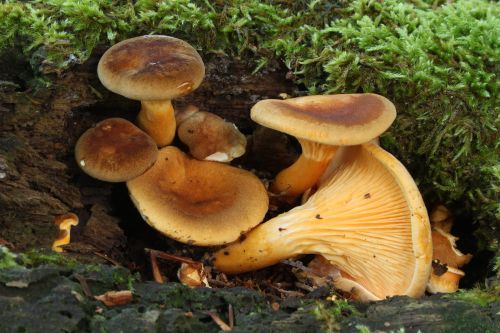
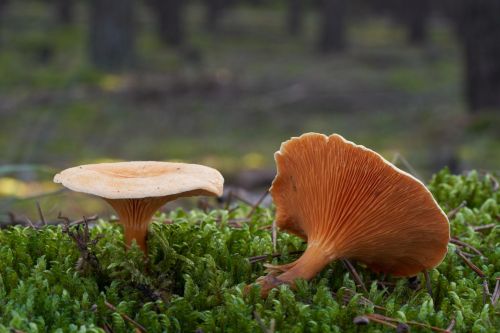

The False Chanterelle is a common woodland mushroom in the UK and is frequently mistaken for the highly prized edible true chanterelle. While not considered deadly, it is not a good edible mushroom and is known to cause stomach upsets in many people. Reports of nausea, vomiting and diarrhoea are common after consumption, especially if eaten in larger quantities or undercooked. Because of its close visual similarity to true chanterelles, it is one of the most commonly misidentified mushrooms by beginner foragers, making it an important species to understand and recognise.
False Chanterelles grow abundantly in coniferous and mixed woodland, often carpeting forest floors in autumn. Unlike true chanterelles, they do not form symbiotic relationships with trees but instead grow on decaying wood, buried roots or woody debris. Their softer texture, deeper orange colour and true gills help distinguish them, but these features can be overlooked in poor light or by inexperienced foragers. Although not lethal, the False Chanterelle has little culinary value, and because of the risk of illness and confusion with other species, it is best regarded as inedible and avoided.
Identification Features:
- Cap colour bright orange to orange-brown
- Cap is thin-fleshed, often softer than true chanterelles
- Cap shape starts convex, later flattening or becoming shallowly funnel-shaped
- Gills are true gills, thin, crowded and forked
- Not blunt ridges like true chanterelles
- Gills are darker orange than the cap
- Stem is slender, orange and fragile
- Flesh is soft and pale orange
- Smell is weak or slightly mushroomy
- Lacks the fruity/apricot smell of true chanterelles
- Grows on or near rotting wood, stumps or forest debris
- Common in coniferous woodland
- Fruits late summer through autumn in the UK
Foraging Safety:
- Do not treat as an edible mushroom
- Frequently causes gastrointestinal upset
- High risk of confusion with true chanterelles
- Key safety checks:
- False chanterelles have true gills
- True chanterelles have blunt, forked ridges
- Colour alone is not a reliable indicator
- Avoid collecting chanterelle-like mushrooms unless:
- You are fully confident in identification
- You check gill/ridge structure carefully
- Avoid mushrooms growing directly from rotting wood
- Always examine multiple features, not just shape or colour
- Beginners should avoid chanterelle lookalikes altogether
- When in doubt, leave it out
Identification video:
Mushroom Quiz 🍄
Question goes here