
Oyster Mushroom (Pleurotus ostreatus)
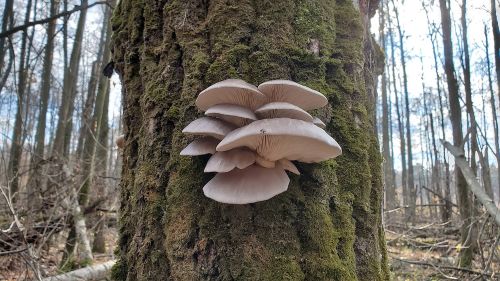


The Oyster Mushroom (Pleurotus ostreatus) is a popular and widely eaten edible mushroom found both cultivated and growing wild across the UK. It gets its name from its oyster-shaped cap and soft grey, cream or pale brown colouring. In the wild, Oyster Mushrooms grow in clusters on dead or dying hardwood trees, particularly beech, willow and poplar. They are most commonly found in autumn and winter, sometimes appearing during cold weather when many other mushrooms are absent.
Oyster Mushrooms are valued for their mild, savoury flavour and tender texture. They are also easy to grow at home, making them familiar to many people through shop-bought varieties. While they are generally considered safe and beginner-friendly, careful identification is still important in the wild, as there are a few poisonous lookalikes. Understanding their growth habit and gill structure makes Oyster Mushrooms one of the more reliable edible woodland fungi when confidently identified.
Identification Features:
- Cap shape fan-shaped or oyster-shaped
- Cap colour grey, pale brown, cream or whitish
- Cap surface smooth and slightly shiny
- Gills are white to pale grey
- Gills are decurrent (run down the stem)
- Stem is short or absent, often off-centre
- Flesh is white and firm, becoming softer when cooked
- No ring or volva present
- Spore print is white to pale lilac
- Grows in overlapping clusters
- Found on dead or dying hardwood trees
- Common on beech, willow, poplar and oak
- Fruits autumn through winter in the UK
Foraging Safety:
- Only eat when 100% confident of identification
- Key safety features:
- Grows on wood, not soil
- White, decurrent gills
- White, decurrent gills
- Possible lookalikes include:
- Angel Wings differences:
- Thinner, more fragile
- Pure white
- Found mainly on conifer wood
- Avoid collecting mushrooms from:
- Roadsides
- Polluted trees
- Treated timber
- Always check the tree type:
- Prefer hardwood, avoid conifers
- Harvest young, fresh specimens
- Discard tough or yellowing mushrooms
- If unsure - leave it out
Cooking Uses:
- Mild, savoury flavour with a slight seafood note
- Tender texture when cooked
- Excellent for:
- Stir-fries
- Sautéing
- Soups
- Pasta dishes
- Risottos
- Absorbs flavours very well
- Pairs nicely with:
- Garlic
- Soy sauce
- Butter
- Cream
- Stems can be tougher - trim if needed
- Cook thoroughly before eating
- Very versatile and beginner-friendly edible
Video Recipe:
Mushroom Quiz 🍄
Question goes here