
Common Puffball (Lycoperdon perlatum)
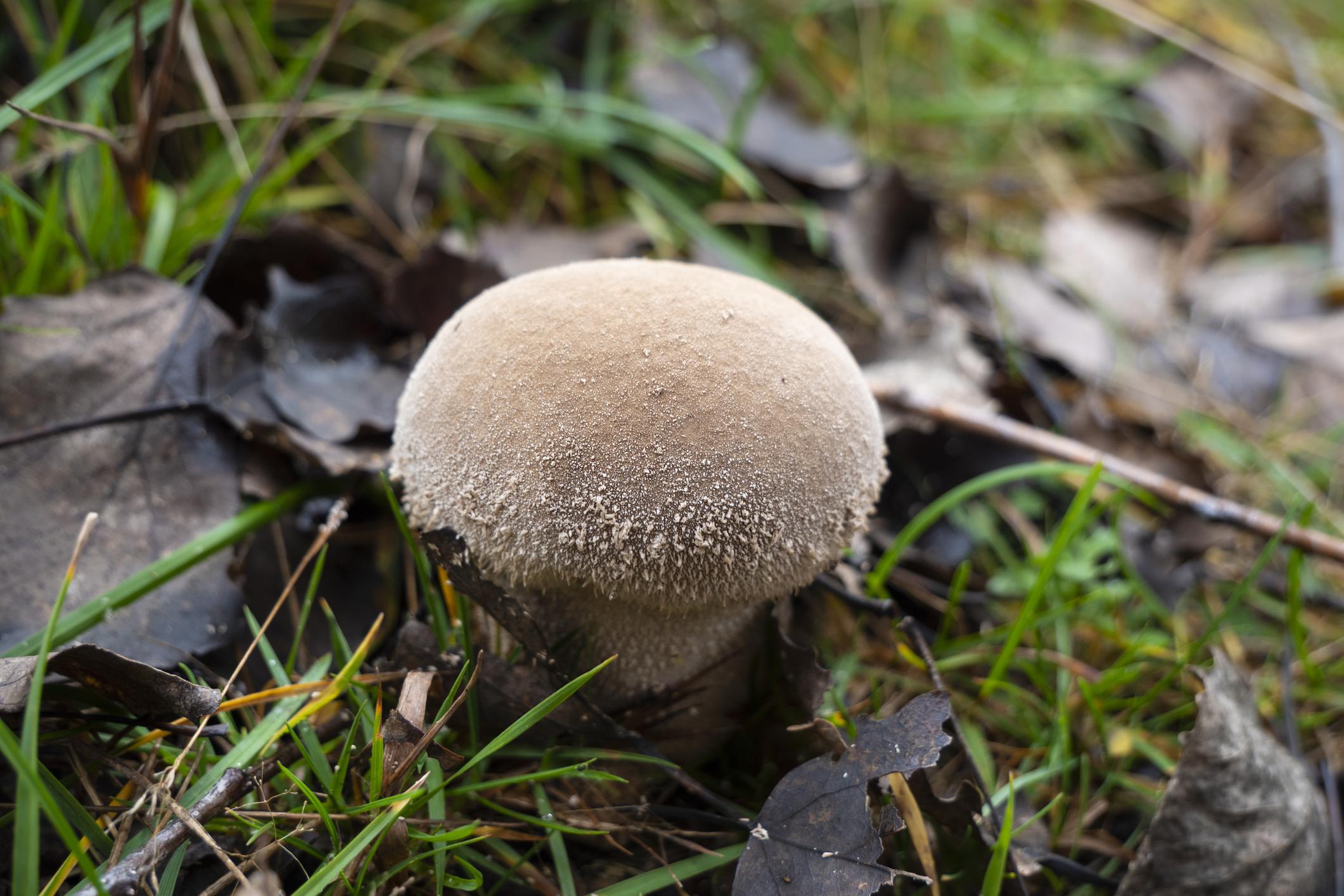


The Common Puffball (Lycoperdon perlatum) is a widespread and easily recognisable fungus found throughout the UK. It grows in woodland, grassland and along woodland paths, usually appearing from late summer through autumn. Unlike typical cap-and-stem mushrooms, puffballs form rounded fruiting bodies without visible gills. When mature, they release clouds of brown spores through a small opening at the top, which gives them their common name.
Young puffballs are considered edible and are often recommended as a beginner-friendly wild mushroom because of their simple structure and lack of dangerous gills. However, correct identification is essential, as immature poisonous species (such as young Amanitas or Earthballs) can sometimes resemble puffballs. The key safety check is always to cut the mushroom in half before eating. When harvested young and fresh, Common Puffballs are mild in flavour and versatile in cooking.
Identification Features:
- Small to medium round or pear-shaped fungus
- Surface white to cream when young
- Covered in small, soft spines or “warts”
- Spines rub off easily
- No visible cap or gills
- Attached to ground by a small stem-like base
- Interior (when young) is pure white and solid
- Interior becomes yellow, then brown and powdery with age
- Mature specimens develop a small hole at the top for spore release
- Spore print is olive-brown
- Grows in woodland soil or grass
- Fruits late summer through autumn
Foraging Safety:
- Edible only when young
- Critical rule:
- Cut in half before eating
- Must be pure white inside
- Do NOT eat if:
- Interior is yellow, olive or brown
- Interior shows any developing gill structure
- Dangerous lookalikes:
- Earthball(Scleroderma citrinum) - dark interior
- Young Amanita species (deadly) - show developing cap inside
- Avoid old, soft or spore-filled specimens
- Always cook before eating
- Avoid collecting from polluted areas
- If unsurelea - ve it out
Cooking Uses:
- Mild, slightly nutty flavour
- Soft texture when cooked
- Best when sliced and:
- Fried in butter
- Added to omelettes
- Used in soups
- Can be breaded and pan-fried
- Absorbs flavours well
- Only use young, firm specimens
- Discard once interior starts to discolour
- Always cook thoroughly
video Recipe:
Mushroom Quiz 🍄
Question goes here