
Bay Bolete (Imleria badia)
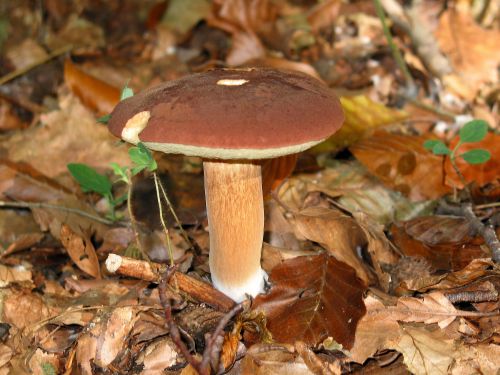


The Bay Bolete (Imleria badia) is a popular and widely distributed edible mushroom found throughout the UK and Europe. It grows in woodland soil, particularly in association with pine, spruce and other conifers, although it can also appear near deciduous trees. Bay Boletes are most commonly found from late summer through autumn and often appear after warm rain. They are considered one of the more reliable edible boletes for beginners once the key identification features are understood.
Bay Bolete is valued for its pleasant, mild flavour and firm texture, making it an excellent addition to a wide range of dishes. Unlike Porcini, it tends to bruise blue when cut or handled, but this colour change is harmless. Because it shares habitat with both edible and toxic boletes, careful identification is still essential. When confidently identified and harvested fresh, the Bay Bolete is regarded as one of the best wild edible mushrooms available to UK foragers.
Identification Features:
- Cap colour chestnut brown to dark reddish-brown
- Cap surface smooth and slightly shiny when wet
- Cap starts convex, becoming flatter with age
- Underside has pores (not gills)
- Pores are pale yellow, turning olive with age
- Pores may bruise slightly blue when touched
- Stem is smooth, usually pale brown or yellowish
- Stem does not have strong dark netting (unlike Porcini)
- Flesh is pale yellow-white
- Flesh often stains blue when cut
- Spore print is olive-brown
- Grows in woodland soil, not on wood
- Fruits late summer to autumn in the UK
Foraging Safety:
- Considered a good edible mushroom
- Only eat when 100% confident in identification
- Blue staining is normal and harmless for this species
- Avoid boletes with:
- Bright red pores
- Very strong unpleasant smells
- Can be confused with:
- Always check:
- Pore colour
- Absence of red tones
- No strong bitter smell
- Avoid old, sponge-like specimens
- Check for insect infestation
- Avoid collecting from polluted areas
- If unsurelea - ve it out
Cooking Uses:
- Mild, pleasant, slightly nutty flavour
- Firm texture holds well in cooking
- Excellent for:
- Frying in butter
- Risottos
- Soups
- Pasta
- Stews
- Pairs well with:
- Garlic
- Thyme
- Parsley
- Cream
- Can be dried (though not as intensely flavoured as Porcini)
- Always cook before eating
- Remove very soft pore layer in older specimens
video Recipe:
Mushroom Quiz 🍄
Question goes here